Women have been asked to call too much of their suffering normal.
Period pain that steals days. Iron loss found only after it becomes anaemia. Birth injury treated as the price of motherhood. Intimate products built without enough respect for the body they enter. A newborn fighting for breath while treatment sits an ocean away.


In Partnership & Collaboration With


result in
perineal tearing.3
So, if you have birthed vaginally or love someone who has,
chances are, you already know about this problem.
Our mission is to address these high-burden, often-overlooked women’s and newborn health needs in Africa, and change this experience and the lives of families starting today. We are developing innovative, scalable and effective solutions based on existing clinical evidence.
1. Hu et al. Dysmenorrhea in sub-Saharan Africa: a systematic review and meta-analysis. BMC Women's Health. 2014;14:39. 2. WHO. Global anaemia estimates, 2025.
3. Kettle C, Tohill S. Perineal trauma after vaginal birth: a systematic review and meta-analysis. BJOG. 2024. 4. WHO. Preterm birth fact sheet. 2025.
High burden. Low attention. Too little built.
We focus on neglected, high-burden morbidities that shape how women live, work, recover and care—but are still treated as too ordinary, too intimate or too difficult to solve.


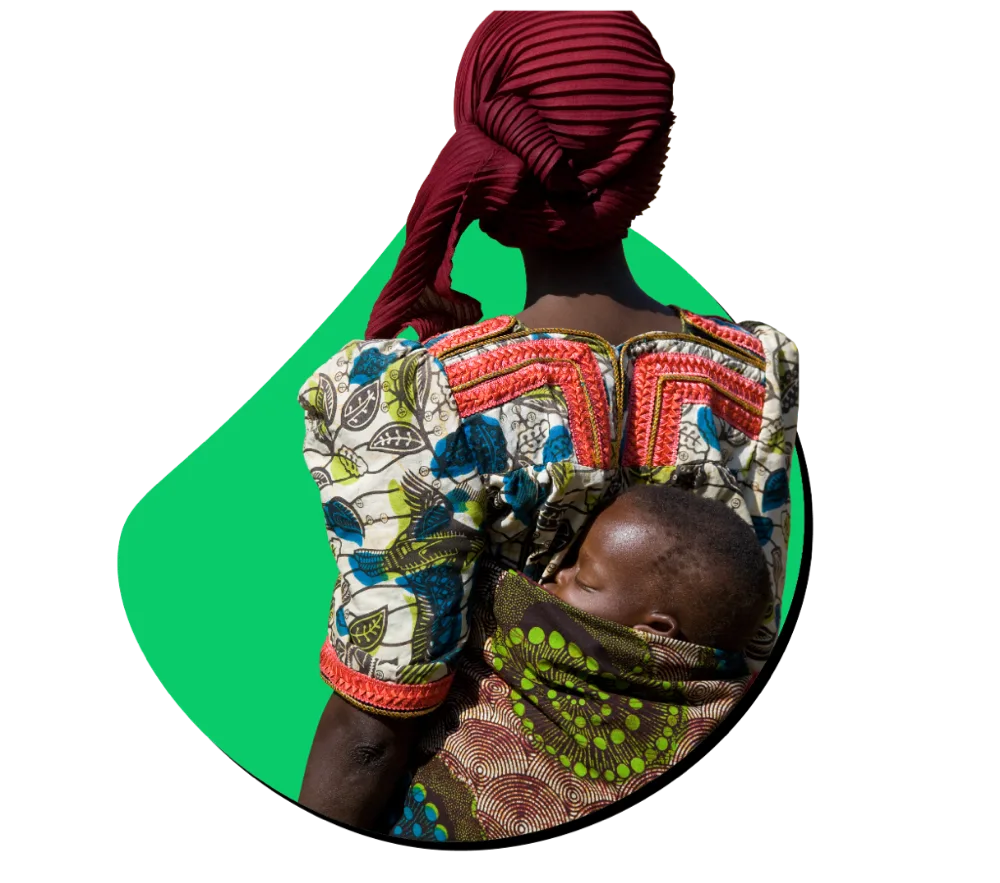

Woman is not a niche.
She is a person moving through school, work, intimacy, pregnancy, birth, recovery, motherhood—or none of these at all.
We use the word women deliberately: to name the people whose health has been chronically underbuilt and whose pain has too often been normalised. We also recognise that not every woman menstruates or gives birth, and not everyone who menstruates or gives birth identifies as a woman. Our language stays precise enough for science and spacious enough for people.
And why SawaSurf?
Sometimes, listening to a woman leads us to the baby in her arms. A newborn’s respiratory crisis is also a mother’s first hours of motherhood—her fear, her recovery, her bond and her child. We could not turn our backs on that.
Meet SawaSurf
Affordable for Kirehe.
Acceptable anywhere else.
Context changes. The standard does not.
We build for world-class quality, rigorous evidence and real affordability at the same time. Equity is not a lower specification. Local manufacture is not a compromise. The product should belong in a district hospital and withstand scrutiny in the world’s most demanding markets.
How we buildBrowse our articles and resources to learn more
Explore research publications, biodesign methodologies, and clinical evidence from Sawazisha MedTech Labs.

 Peredy & Dr. Timothy
 Oct 24, 2026
Why We Say 'Women': Centering Dignity and Clinical Rigor in African MedTech
Read article: Why We Say 'Women': Centering Dignity and Clinical Rigor in African MedTech Sawazisha Clinical TeamOct 04, 2026
Advancing Biomechanical Perineal Protection: Clinical Insights from Waridi™ Validation
Read article: Advancing Biomechanical Perineal Protection: Clinical Insights from Waridi™ Validation Sawazisha Biodesign TeamSep 18, 2026